
Our mission is to ensure the generation of accurate and precise findings.
Please enter subscribe form shortcode
Please enter instagram feed shortcode

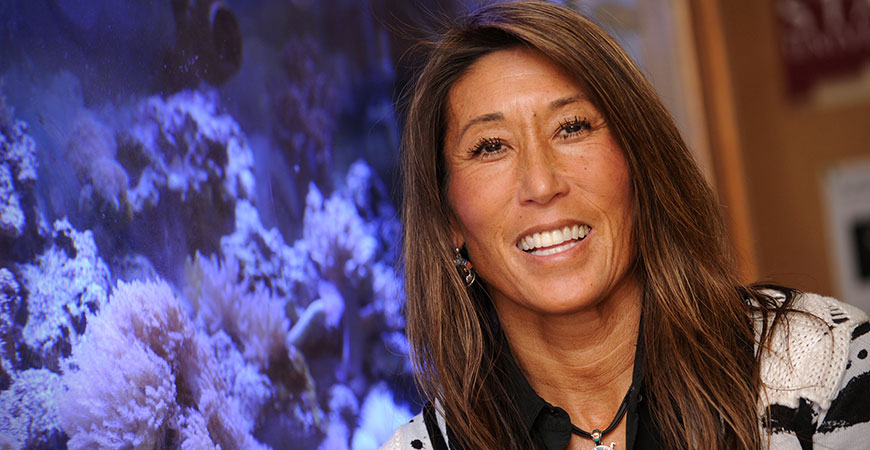
Molecular and Cellular Biology Professor Michele “Nish” Nishiguchi has been inducted as a Fellow of the California Academy of Sciences and was recently named president-elect for the Society for Integrative and Comparative Biology (SICB).
She is one of 11 distinguished scientists inducted at the California Academy of Sciences’ Annual Fellows Gathering this year.
“I am delighted that the California Academy of Sciences is acknowledging the quality and impact of Professor Nishiguchi’s research program,” School of Natural Sciences Dean Betsy Dumont said. “Her leadership in science as well as her mentorship of fellow faculty and students have had a significant, positive impact on our campus. She is a wonderful role model for us all.”
Former UC Merced Professor Monica Medina nominated Nishiguchi. Inductees are nominated by their peers and elected by the California Academy of Sciences’ Board of Trustees. There are more than 450 Fellows recognized for their contributions to science.
“It’s a great honor to be recognized for your accomplishments,” Nishiguchi said.
The San Francisco-based California Academy of Sciences began in 1853 as a small collaborative of researchers displaying their findings from the natural world. It has become an institution focused on the grand challenge of regenerating the planet through science, learning and collaboration.
The Academy campus includes Steinhart Aquarium, Morrison Planetarium and the Kimball Natural History Museum, along with world-class research and education departments.
Nishiguchi came to UC Merced in 2020 from New Mexico State University. Her microbiology lab focuses on the evolution and ecology of associations between animals and their bacterial partners.
“I really want to do some collaborative work with the museums,” Nishiguchi said. “I envision doing a big exhibit over there, maybe on beneficial symbioses. The museums are all about educating the public and I get to be part of that mission. I’d love to help them design and fundraise for the exhibits because it’s another way to spread the word and get people excited about the science.”
Nishiguchi’s other new position, president-elect of SICB, comes after many years of membership. She joined the society in 1988 as a master’s student and has been an active member, helping recruit other society members, and obtaining grant funding to increase enrollment among students, postdocs and faculty from underrepresented communities to help them attend society meetings. She ran for president on a platform of increasing diversity and inclusivity. As president-elect she will serve as a vice president for two years before taking the reins.
“I love this society because it’s really committed to the students,” she said. “I’m all about training and making sure that students learn from their experiences, and I love taking my students to this society’s meetings because they always learn and grow as science communicators. SICB is student oriented, and has always welcomed the students with workshops, opportunities to network with new mentors, and socials aimed particularly for this next generation of scholars.”
The SICB is dedicated to research, education and public awareness in the areas of organismal, functional and evolutionary biology. Formed in 1902, the society has approximately 3,000 members whose research interests range from organismal biology to population biology/ecology to systematics and evolutionary biology. This society also supports students in these fields through grants, awards, fellowships, internships and professional development.
UCMerced Newsroom Link

Interference competition, wherein bacteria actively antagonize and damage their microbial neighbors, is a key ecological strategy governing microbial community structure and composition. To gain a competitive edge, bacteria can deploy a diverse array of antimicrobial weapons—ranging from diffusible toxins to contact-mediated systems in order to eliminate their bacterial rivals.
Read More
Biofilm formation is important for microbial survival, adaptation, and persistence within mutualistic and pathogenic systems in the Vibironaceae. Biofilms offer protection against environmental stressors, immune responses, and antimicrobial treatments by increasing host colonization and resilience. This review examines the mechanisms of biofilm formation in Vibrio species, focusing on quorum sensing, cyclic-di-GMP signaling, and hostspecific adaptations that influence biofilm structure and function.
Read More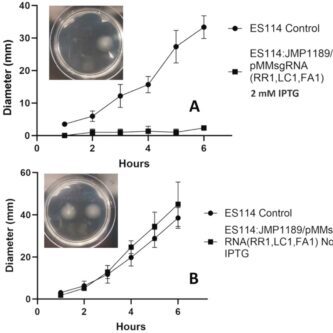
The Vibrio fischeri—Euprymna scolopes symbiosis has become a powerful animal—microbe model system to examine the genetic underpinnings of symbiont development and regulation. Although there has been a number of elegant bacterial genetic technologies developed to examine this symbiosis, there is still a need to develop more sophisticated methodologies to better understand complex regulatory pathways that lie within the association.
Read More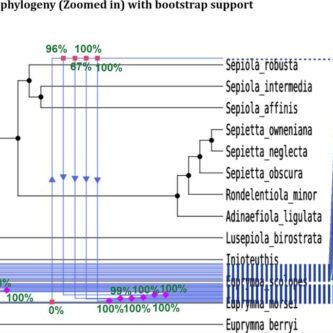
Cophylogenies represent coevolutionary histories of two or more sets of coevolved taxa, and are used to study coevolution and other fundamental evolutionary processes. As with traditional phylogenies, cophylogenies are primarily reconstructed using computational analysis of DNA and other biomolecular sequence data. An essential question concerns the reliability of reconstructed phylogenies and cophylogenies.
Read More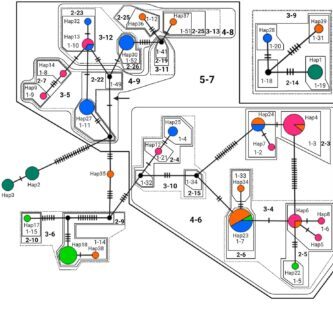
Symbiotic marine bacteria that are transmitted through the environment are susceptible to abiotic factors (salinity, temperature, physical barriers) that can influence their ability to colonize their specific hosts. Given that many symbioses are driven by host specificity, environmentally transmitted symbionts are more susceptible to extrinsic factors depending on conditions over space and time.
Read More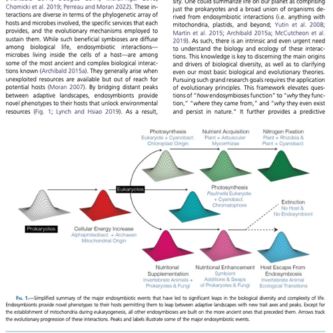
Life on Earth comprises prokaryotes and a broad assemblage of endosymbioses. The pages of Molecular Biology and Evolution and Genome Biology and Evolution have provided an essential window into how these endosymbiotic interactions have evolved and shaped biological diversity.
Read More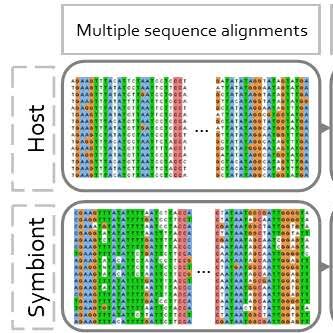
Just as a phylogeny encodes the evolutionary relationships among a group of organisms, a cophylogeny represents the coevolutionary relationships among symbiotic partners.
Read More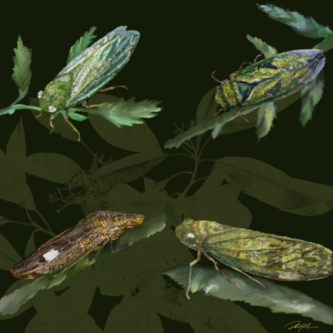
Chromosome-level genome assembly of the aster leafhopper (Macrosteles quadrilineatus) reveals the role of environment and microbial symbiosis in shaping pest insect genome evolution
Read More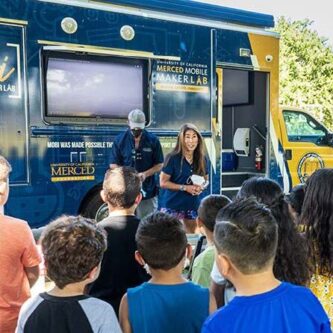
Through outreach to area schools and the opportunities afforded to undergraduates, INSITE and the affiliated faculty members are training the next generations of STEM scientists.
Read More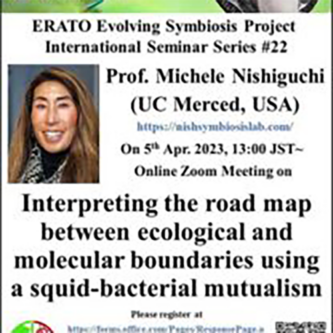
Prof. Michele Nishiguchi (University of California Merced, USA) “Interpreting the road map between ecological and molecular boundaries using a squid-bacterial mutualism”
Read More
Molecular and Cellular Biology Professor Michele “Nish” Nishiguchi has been inducted as a Fellow of the California Academy of Sciences and was recently named president-elect for the Society for Integrative and Comparative Biology (SICB).“Interpreting the road map between ecological and molecular boundaries using a squid-bacterial mutualism”
Read More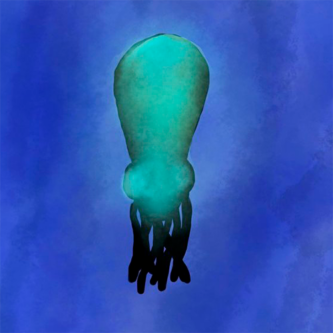
Prof. Michele Nishiguchi (University of California Merced, USA) “Interpreting the road map between ecological and molecular boundaries using a squid-bacterial mutualism”
Read More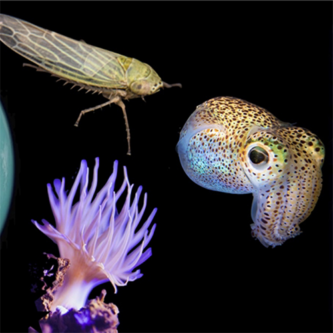
UC Merced has received a $12.5 million grant funded by the National Science Foundation (NSF) to develop the Biology Integration Institute (BII): INSITE — the INstitute for Symbiotic Interactions, Training and Education — a research collaborative that aims to expand the fundamental knowledge of symbioses and inform immediate and long-term conservation strategies in the face of climate change.
Read More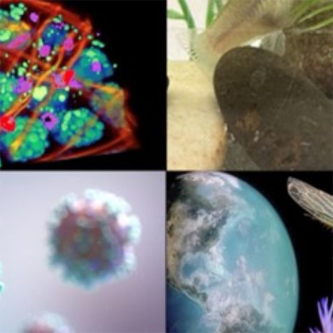
From understanding the multifaceted transmission of disease to deciphering how living organisms adapt to harsh conditions, answering big questions in biology requires interdisciplinary research and scientists engaging and partnering with those from other fields of study.
Read More