
Our mission is to ensure the generation of accurate and precise findings.
Please enter subscribe form shortcode
Please enter instagram feed shortcode

The Biology Integration Institute (BII): The Institute for Symbiotic Interactions, Training and Education in the Face of a Changing Climate, or INSITE, stands out because it is supported by $12.5 million from the National Science Foundation, one of the largest NSF grants UC Merced has ever received.
But there is another reason professors Michele “Nish” Nishiguchi and Gordon Bennett are proud of the institute they co-lead: Through outreach to area schools and the opportunities afforded to undergraduates, they and the affiliated faculty members are training the next generations of STEM scientists.
Just ask Toxtli Huitzilopochtli, a fourth-year environmental sciences major who joined INSITE in August after spending a summer working with Bennett through the Undergraduate Research Opportunities Center (UROC).
“It has been a really positive experience,” he said. Huitzilopochtli has long been fascinated by insects, and Bennett works to understand leafhoppers and their deep, complex symbiotic relationship with two bacteria that live inside them. “Initially, there was a training phase, so I started in the lab doing a little bit of everything. But then I got to do field work, which is more of what I’m interested in.”
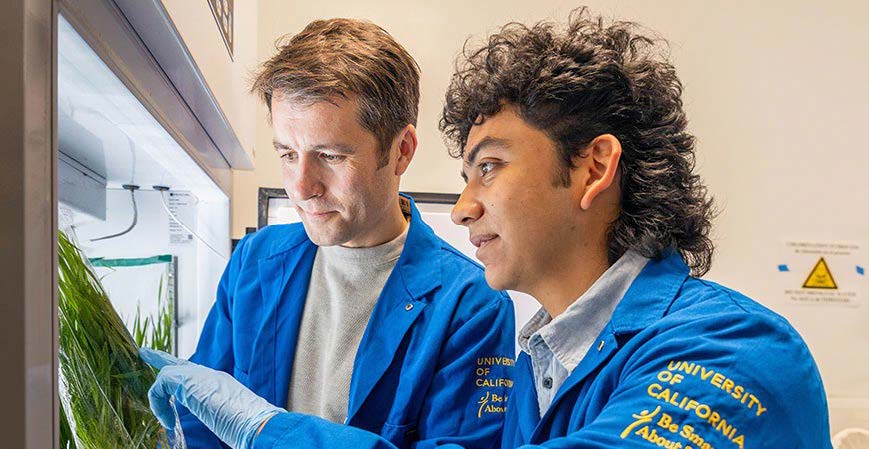 He has been working with a graduate student mentor and learning an array of skills in biology, conservation and applied math to consider species’ short-term acclimatization and long-term adaptation methods.
“I've learned a lot of computer science, which is very beneficial for working with large datasets,” Huitzilopochtli said. “I especially like field work that involves a lot of data.”
Bennett and Nishiguchi said that through interdisciplinary activities, they hope to further instill a deep appreciation for biodiversity and its conservation, as well as enthusiasm to bridge biology and mathematics to answer big questions.
In addition to the overarching goal of expanding fundamental knowledge of symbioses and developing immediate and long-term conservation strategies in the face of climate change, Nishiguchi and Bennett place a high priority on opportunities for undergraduates.
Students can work on a variety of research programs with a diverse group of faculty members, or they can develop and work on their own projects. They can learn about scientific writing by coauthoring papers, as Huitzilopochtli has. Graduate students and faculty mentor them. They get networking and professional development opportunities.
INSITE also offers summer internships for undergraduates from other schools.
Nathalie Chavez was an undergraduate student studying environmental resource management at CSU Bakersfield when she applied for the summer program. She lived on campus for about eight weeks, worked in the Nishiguchi lab, attended professional development seminars through UROC and worked with graduate student mentors.
Before the summer program, Chavez hadn't had much contact with graduate students, so the internship was helpful because as a first-generation student she didn't have anyone else to talk to about graduate school.
“It’s such a great program,” she said. “It really opened my eyes to the different professions I could pursue within academia.” She went on to apply for environmental policy and management master’s programs at UCs Davis and Santa Barbara. “It was also a great way to connect with other students to talk about how our classes were going and some of the struggles we were dealing with.”
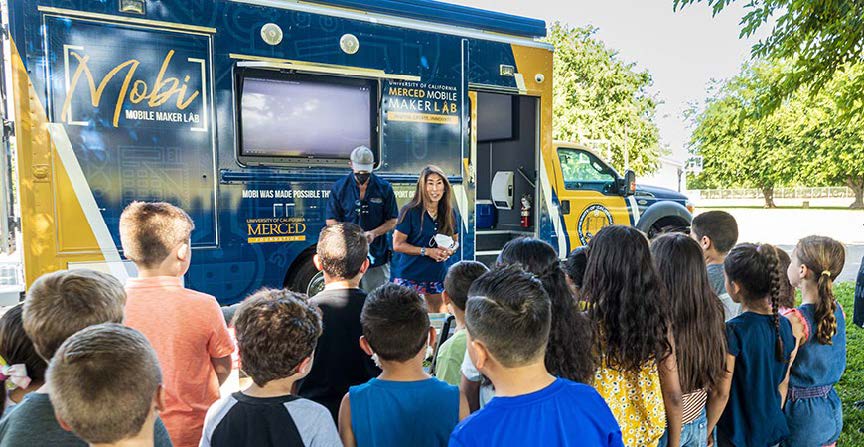
Throughout the school year, INSITE team members work to bring science to future generations of college students by going to schools in the area and bringing age-appropriate curricula. INSITE’s outreach coordinator, Brenda Ortiz, has spent the past year developing relationships with Central Valley schools and educators. These efforts created opportunities for UC Merced graduate students to share their knowledge and enthusiasm with local schoolchildren.
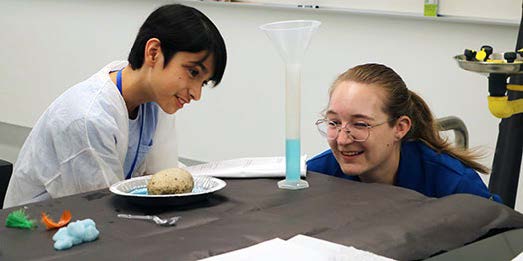 Perla Gonzalez Moreno, a fourth-year graduate student who works in Nishiguchi’s lab looking at the symbiosis between bioluminescent bacteria and their bobtail squid host, helps lead the outreach effort.
“I’m the one who comes up with the mini labs. I love teaching,” she said. “A lot of the activities can be tailored to various age groups. We teach them about beneficial bacteria, about symbiosis and about the research INSITE is doing.”
One of the mini labs she developed uses gummy bears to teach young students about evolution and how species adapt to survive. Gonzalez Moreno also worked with CalTeach to host a Bobcat Summer STEM Academy session for high school students to learn basic microbiology laboratory techniques.
“I think the biggest benefit of these outreach efforts is exposure,” she said.
“There are a lot of students who would never have thought about careers in
STEM fields, and then they participate in these activities and some of them start
to think a little differently about their futures.”
An annual science day collaboration with CSU Stanislaus allows visiting
students to work with squid, anemones and leafhoppers, learn how to do squid
dissections, field collection and other scientific tasks. Parents can also attend, and
Gonzalez Moreno said that when parents become interested, they can help
encourage their children to work toward scientific careers.
Graduate student Mara Schwiesow said being part of INSITE keeps her very
busy between the research and outreach efforts, but she feels she is having a
positive impact through the CalTeach academies she hosts for middle school
students.
“We are making connections with the students and teaching them not just about
science in general but about climate change, what that means for animals and
ourselves and some of the ways that we might be able to deal with it,” she said.
“In our post-session surveys, they said they learned about climate change in the
ocean, so that was kind of a big win for me.”
In the 2 1/2 years since INSITE launched, Ortiz, Nishiguchi, Bennett and the
INSITE team have built strong relationships with area schools, but they also have
gotten the community involved by sponsoring public lectures and events.
“Our mission is the science, of course, but it's also to make the community aware
of what we're doing and how it impacts them,” Nishiguchi said.
The Biology Integration Institute (BII): The Institute for Symbiotic Interactions, Training and Education in the Face of a Changing Climate, or INSITE, stands out because it is supported by $12.5 million from the National Science Foundation, one of the largest NSF grants UC Merced has ever received.
But there is another reason professors Michele “Nish” Nishiguchi and Gordon Bennett are proud of the institute they co-lead: Through outreach to area schools and the opportunities afforded to undergraduates, they and the affiliated faculty members are training the next generations of STEM scientists.
Just ask Toxtli Huitzilopochtli, a fourth-year environmental sciences major who joined INSITE in August after spending a summer working with Bennett through the Undergraduate Research Opportunities Center (UROC).
“It has been a really positive experience,” he said. Huitzilopochtli has long been fascinated by insects, and Bennett works to understand leafhoppers and their deep, complex symbiotic relationship with two bacteria that live inside them. “Initially, there was a training phase, so I started in the lab doing a little bit of everything. But then I got to do field work, which is more of what I’m interested in.”
He has been working with a graduate student mentor and learning an array of skills in biology, conservation and applied math to consider species’ short-term acclimatization and long-term adaptation methods.
“I've learned a lot of computer science, which is very beneficial for working with large datasets,” Huitzilopochtli said. “I especially like field work that involves a lot of data.”
Bennett and Nishiguchi said that through interdisciplinary activities, they hope to further instill a deep appreciation for biodiversity and its conservation, as well as enthusiasm to bridge biology and mathematics to answer big questions.
In addition to the overarching goal of expanding fundamental knowledge of symbioses and developing immediate and long-term conservation strategies in the face of climate change, Nishiguchi and Bennett place a high priority on opportunities for undergraduates.
Students can work on a variety of research programs with a diverse group of faculty members, or they can develop and work on their own projects. They can learn about scientific writing by coauthoring papers, as Huitzilopochtli has. Graduate students and faculty mentor them. They get networking and professional development opportunities.
INSITE also offers summer internships for undergraduates from other schools.
Nathalie Chavez was an undergraduate student studying environmental resource management at CSU Bakersfield when she applied for the summer program. She lived on campus for about eight weeks, worked in the Nishiguchi lab, attended professional development seminars through UROC and worked with graduate student mentors.
Before the summer program, Chavez hadn't had much contact with graduate students, so the internship was helpful because as a first-generation student she didn't have anyone else to talk to about graduate school.
“It’s such a great program,” she said. “It really opened my eyes to the different professions I could pursue within academia.” She went on to apply for environmental policy and management master’s programs at UCs Davis and Santa Barbara. “It was also a great way to connect with other students to talk about how our classes were going and some of the struggles we were dealing with.”
Throughout the school year, INSITE team members work to bring science to future generations of college students by going to schools in the area and bringing age-appropriate curricula. INSITE’s outreach coordinator, Brenda Ortiz, has spent the past year developing relationships with Central Valley schools and educators. These efforts created opportunities for UC Merced graduate students to share their knowledge and enthusiasm with local schoolchildren.
Perla Gonzalez Moreno, a fourth-year graduate student who works in Nishiguchi’s lab looking at the symbiosis between bioluminescent bacteria and their bobtail squid host, helps lead the outreach effort.
“I’m the one who comes up with the mini labs. I love teaching,” she said. “A lot of the activities can be tailored to various age groups. We teach them about beneficial bacteria, about symbiosis and about the research INSITE is doing.”
One of the mini labs she developed uses gummy bears to teach young students about evolution and how species adapt to survive. Gonzalez Moreno also worked with CalTeach to host a Bobcat Summer STEM Academy session for high school students to learn basic microbiology laboratory techniques.
“I think the biggest benefit of these outreach efforts is exposure,” she said.
“There are a lot of students who would never have thought about careers in
STEM fields, and then they participate in these activities and some of them start
to think a little differently about their futures.”
An annual science day collaboration with CSU Stanislaus allows visiting
students to work with squid, anemones and leafhoppers, learn how to do squid
dissections, field collection and other scientific tasks. Parents can also attend, and
Gonzalez Moreno said that when parents become interested, they can help
encourage their children to work toward scientific careers.
Graduate student Mara Schwiesow said being part of INSITE keeps her very
busy between the research and outreach efforts, but she feels she is having a
positive impact through the CalTeach academies she hosts for middle school
students.
“We are making connections with the students and teaching them not just about
science in general but about climate change, what that means for animals and
ourselves and some of the ways that we might be able to deal with it,” she said.
“In our post-session surveys, they said they learned about climate change in the
ocean, so that was kind of a big win for me.”
In the 2 1/2 years since INSITE launched, Ortiz, Nishiguchi, Bennett and the
INSITE team have built strong relationships with area schools, but they also have
gotten the community involved by sponsoring public lectures and events.
“Our mission is the science, of course, but it's also to make the community aware
of what we're doing and how it impacts them,” Nishiguchi said.

Interference competition, wherein bacteria actively antagonize and damage their microbial neighbors, is a key ecological strategy governing microbial community structure and composition. To gain a competitive edge, bacteria can deploy a diverse array of antimicrobial weapons—ranging from diffusible toxins to contact-mediated systems in order to eliminate their bacterial rivals.
Read More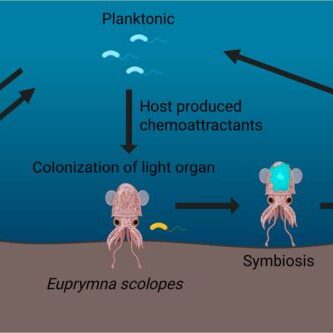
Biofilm formation is important for microbial survival, adaptation, and persistence within mutualistic and pathogenic systems in the Vibironaceae. Biofilms offer protection against environmental stressors, immune responses, and antimicrobial treatments by increasing host colonization and resilience. This review examines the mechanisms of biofilm formation in Vibrio species, focusing on quorum sensing, cyclic-di-GMP signaling, and hostspecific adaptations that influence biofilm structure and function.
Read More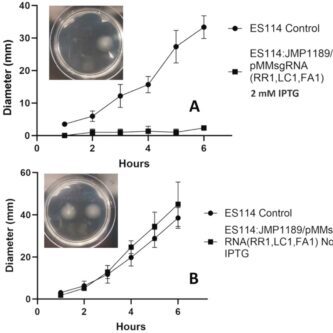
The Vibrio fischeri—Euprymna scolopes symbiosis has become a powerful animal—microbe model system to examine the genetic underpinnings of symbiont development and regulation. Although there has been a number of elegant bacterial genetic technologies developed to examine this symbiosis, there is still a need to develop more sophisticated methodologies to better understand complex regulatory pathways that lie within the association.
Read More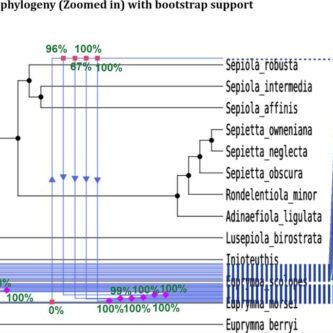
Cophylogenies represent coevolutionary histories of two or more sets of coevolved taxa, and are used to study coevolution and other fundamental evolutionary processes. As with traditional phylogenies, cophylogenies are primarily reconstructed using computational analysis of DNA and other biomolecular sequence data. An essential question concerns the reliability of reconstructed phylogenies and cophylogenies.
Read More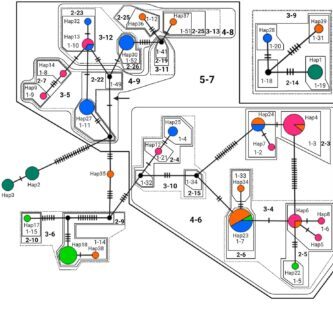
Symbiotic marine bacteria that are transmitted through the environment are susceptible to abiotic factors (salinity, temperature, physical barriers) that can influence their ability to colonize their specific hosts. Given that many symbioses are driven by host specificity, environmentally transmitted symbionts are more susceptible to extrinsic factors depending on conditions over space and time.
Read More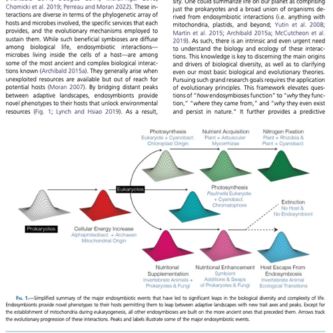
Life on Earth comprises prokaryotes and a broad assemblage of endosymbioses. The pages of Molecular Biology and Evolution and Genome Biology and Evolution have provided an essential window into how these endosymbiotic interactions have evolved and shaped biological diversity.
Read More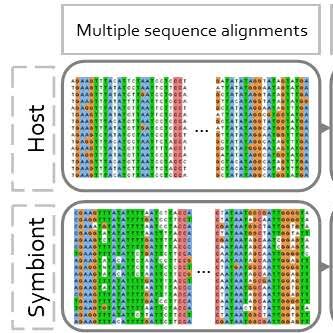
Just as a phylogeny encodes the evolutionary relationships among a group of organisms, a cophylogeny represents the coevolutionary relationships among symbiotic partners.
Read More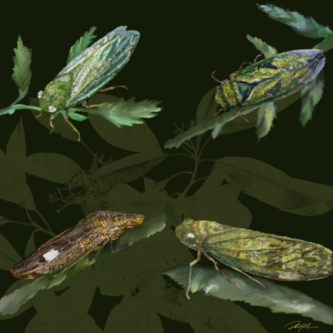
Chromosome-level genome assembly of the aster leafhopper (Macrosteles quadrilineatus) reveals the role of environment and microbial symbiosis in shaping pest insect genome evolution
Read More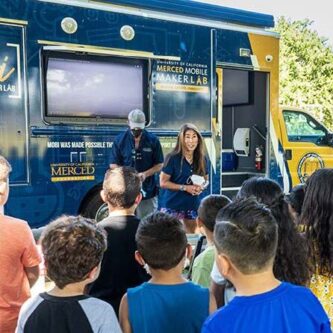
Through outreach to area schools and the opportunities afforded to undergraduates, INSITE and the affiliated faculty members are training the next generations of STEM scientists.
Read More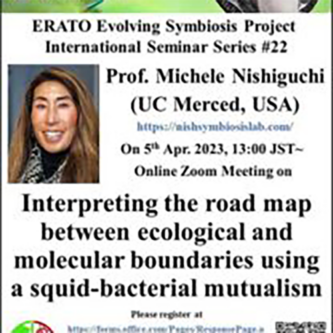
Prof. Michele Nishiguchi (University of California Merced, USA) “Interpreting the road map between ecological and molecular boundaries using a squid-bacterial mutualism”
Read More
Molecular and Cellular Biology Professor Michele “Nish” Nishiguchi has been inducted as a Fellow of the California Academy of Sciences and was recently named president-elect for the Society for Integrative and Comparative Biology (SICB).“Interpreting the road map between ecological and molecular boundaries using a squid-bacterial mutualism”
Read More
Prof. Michele Nishiguchi (University of California Merced, USA) “Interpreting the road map between ecological and molecular boundaries using a squid-bacterial mutualism”
Read More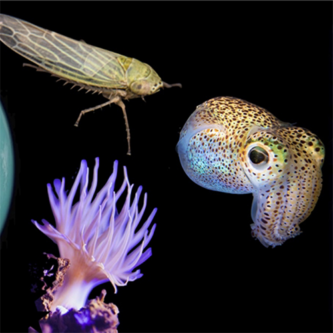
UC Merced has received a $12.5 million grant funded by the National Science Foundation (NSF) to develop the Biology Integration Institute (BII): INSITE — the INstitute for Symbiotic Interactions, Training and Education — a research collaborative that aims to expand the fundamental knowledge of symbioses and inform immediate and long-term conservation strategies in the face of climate change.
Read More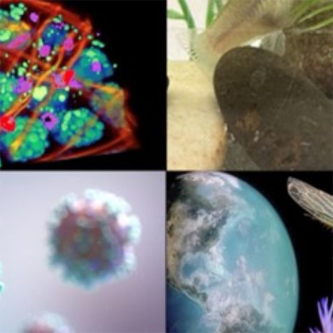
From understanding the multifaceted transmission of disease to deciphering how living organisms adapt to harsh conditions, answering big questions in biology requires interdisciplinary research and scientists engaging and partnering with those from other fields of study.
Read More